Well, we independent nanotech bloggers can fold up our laptops and emerge from our mothers' basements. General Electric is about to blow us all out of the water with a blog From Edison's Desk.
Backgrounder
Imagination at Work
Well, we independent nanotech bloggers can fold up our laptops and emerge from our mothers' basements. General Electric is about to blow us all out of the water with a blog From Edison's Desk.
Backgrounder
Imagination at Work
My friends in the molecular manufacturing community are going to crucify me for this one, but this sounds an awful lot like a "desktop nanofactory."
Did Monks try to make gold? (By Rossella Lorenzi, Discovery News)And what was a philosopher's stone? Wikipedia says:May 5, 2006 — A ceramic cone unearthed at a remote British abbey might indicate that Cistercian monks implemented the Benedectine motto "ora et labora" (pray and work) with another rule: "make gold."
On display for the first time at Bylands Abbey, which was founded in 1137 by Cistercian monks in North Yorkshire, the cone is what's known as an alembic.
...
The alembic could have been used in medicinal preparations, to distill alcoholic spirits by monks who fancied an illicit tipple, or in pursuit of the alchemist's dream — gold.
...
Following the Aristotelian theory of elements, which stated that all things consisted of fire, air, water and earth, the early alchemists believed that gold could be obtained by altering the elements in a base metal.
A little shift in one metal's composition would have made a metal of low esteem, such as lead, turn into tin, iron, copper, mercury and finally, gold. Alchemists would have also tried to stimulate transmutation with a specific agent — the legendary philosopher's stone. More here
The philosopher's stone, in Latin philosophi lapis, is a mythical substance that supposedly could turn inexpensive metals into gold and/or create an elixir that would make humans younger, thus delaying death.


Popular Mechanics gets it: "Not all the new nanobots will look like machines." More here.
Backgrounder
Dendrimers could have cancer in their clutches
'Lost' in nanobot space
A response to 'I, Nanobot'
 Dr. Maleki: "From Iran's point of view, the nuclear issue is not a real problem. This is part of the overall process of development which is going on in all parts of our society, like nanotechnology, biotechnology, IT and so on ..."
Mr. Kian: "It is amazing to hear about such claims as progress in nanotechnology in a country where there is widespread unemployment, poverty, drug addiction, prostitution, so many women's issues and, finally, political repression and coercion."
From a Voice of America exchange between Dr. Abbas Maleki of Sharif University in Tehran, currently a Harvard Research Fellow, and Bijan Kian, a businessman associated with the American Council on Foreign Relations, as reported in The Wall Street Journal.
Backgrounder
Iran: N is for nano, nuke and not fair
Iran hard-liner: Nano a key to regional power
Israel and Iran going nano


At left, MIT nano-nerds Rutledge Ellis-Behnke and Professor Gerald E. Schneider. Pictured at right is Karl,"Everyone's favorite wheelchair bound drunk guy"
Karl, an engineer in Cromwell, Conn., has been living with a tumor in his brain stem for six years, according to his MySpace blog. Karl has undergone numerous surgeries to correct paralysis in various parts of his body. But his spirits improved recently when he read about MIT's nanotechnology research. In Karl's words ...
I have been living like this for 6 years, and was able to graduate college as an Engineer. But, my nerves are running short. Something is gonna need to change. I don't think, I can deal much longer. Recently. I thought my only possible chance for change was stem cells. But, then I saw this article: It is titled Nanotechnology maybe able to repair damaged brains. Apparently, some Nerds at M.I.T. have fixed damaged mice brains. Well, God Bless Nerds!!
Karl is asking readers to contact their senators to urge continued funding for this program. Something tells me that funding is not in danger, though.
But Karl's plea does remind me that real lives wait on the other end of nanotech research. And those who would place a moratorium on its development or, conversely, hype it up beyond realistic expectation, should keep people like Karl in mind.
Neuroscientist Rutledge Ellis-Behnke, one of the MIT nerds in charge of this research, said it better in a story written by my friend Charles Choi of UPI:
"There are 550,000 new cases of severe stroke a year, with over 3 million living with the effects of severe stroke today in the United States alone. There are about 100,000 new cases of severe traumatic brain injury a year, with 2 million living with the effects," Ellis-Behnke said. "Those are the reasons I do what I do every day."
 A student has a nanotechnology report to write, so the eager young nano cadet turned, of course, to Yahoo! Answers (Beta). The following questions are still "open:"
What is Nanotechnology? and ...
How is nanotechnology connected to forensics?
Get your answers in while you can and have your expertise forever enshrined in Yahoo! Not sure what happens after these questions are "closed." I guess we should all find something else to do.
Update: Doing a quick nanotechnology search on Yahoo! Answers, I'm amazed at some of the strange and inaccurate "resolved" information circulating out there. It looks like a lot of kids are using this service to write reports and do their homework. Yahoo! should open these questions up again and give correct information enough time to filter through.
British think tank Demos continues to play a leading role in gathering scientists and what I've called "consumers of science" together in one room to discuss the necessary tug-of-war between progress and price, between the possible and the desirable, when it comes to nanotechnology.
Between the work of Demos in Britain and the Wilson Center in the United States, the cause of citizen involvement in nanotech development is off to a great start.
The video above shows a final citizen/nanoscientist workshop in Demos' two-year project with Lancaster University on nanotechnology and society. "Governing at the nanoscale."
Here is one of my favorite exchanges on the video:
Citizen: "I think you need to be quite clear that before something becomes a manufactured product and it sells on the marketplace, it has to be safe. Well, OK, within limits, within parameters and within a sensible area but somebody has got to take responsibility for saying that this minimum level of testing has to be performed."Scientist: "I think as long as I’m honest, I say, ‘Look, I can do this, I can see it could do a lot of good, potentially, and I can’t see any serious way at the moment in which it could be misused,' then that would be fine. But for me to say that it can’t be misused, I think would be wrong. And for me to take away that decision from the public, to say ‘You’re not going to have any of the benefits or any of the drawbacks,' I think you have to let people be sensible."
I have heard echoes of these points of view quite often in my own conversations with concerned citizens and nanoscientists over the past few years. Most citizens understand that with progress also comes risk. What they want is accountability. Who is in charge of getting it right and who is responsible if something goes wrong?
While most nanotech scientists and business leaders are outraged at the thought of denying society the benefits of nanotechnology just because a few people are afraid something might go wrong.
There is room for compromise among thoughtful people. Keep talking.
Backgrounder
Between hype and doom: keeping an eye on nanotech, by Jack Stilgoe
Open talk of risk 'makes business sense'
How to fight misinformation in two easy words: Honesty, imagination
Nano environment/policy papers
A new wrinkle for Eddie Bauer
 When the Twenty-First Century Nanotechnology R&D bill was being debated, it included a call for a comprehensive SEIN (Societal and Ethical Implications of Nanotechnology) center. (Howard) Lovy called a SEIN center "a philosophy and communications department head's wet dream come true," and I have little doubt he was describing me -- and on one level he is correct. For far too long, scientists have simply ignored the role of the public.
David Berube, writing in his book, Nano-Hype
Backgrounder
Clash of the Nanotech Titans
 Gannett writer Erin Kelly's report this week on nanotech and the environment begins with the extremely thin "news" angle of "Magic Nano" gone horribly awry.
"A preview of what could go wrong happened just last week in Germany, where "Magic Nano" -- a glass and ceramic tile cleaner in an aerosol can -- was recalled by the manufacturer after nearly 100 consumers reported problems breathing."
The main question is neither asked nor answered: Is this a nanotechnology-enabled product, or just a product that uses “nano” in its name?
In the end, though, it hardly matters. As I've written ad nauseam here over the past few years, it is perception that matters (see here, here and here). And to the Gannett reporter's credit, as much is said further down in the story.
"Business leaders said they fear that American consumers could reject nanotechnology -- in much the same way that most Europeans have rejected genetically modified food -- unless they are convinced that protections are in place. The perception of danger by the public -- even if it isn't based on fact -- can kill nanotechnology before its benefits are realized, analysts say."
So, what’s important here is the perception of risk and not actual risk. It makes no difference that Magic Nano does not use nanotechnology. In the public mind, it does, so get over it and go from there. It’s part of a nano dumb show being acted out in public.
Like Lux Research VP Matthew Nordan told the House Science Committee late last year:
" 'Responsible development of nanotechnology -- to ensure that the U.S. obtains the full benefits of nanotechnology applications -- requires addressing both real and perceptual risks.' He added, 'Even if studies showed every commercially relevant nanoparticle to be harmless in every real-world usage scenario, public skepticism about the safety of nanoparticles could still build and sharply limit the use of nanoparticles in products -- similar to the situation encountered with genetically modified organisms in Eurpoe.' "
Matthew is one of the few nanotech industry boosters who “gets it” and will say so in public. He also told the committee (sorry, I do not have a link to the following quote, but it was reported in the Daily Environment Report, No. 223, p. A-5, Nov. 21, 2005, a publication of the Bureau of National Affairs Inc.
“When it comes to public perception, said Nordan, 'it only takes one bad apple to spoil the bunch.' Unfortunately, he added, industry has done 'exceedingly little' on these issues. The problem, Nordan said, is that industry startups that are doing a lot of nanotechnology innovation often avoid such questions so that they do not scare off investors. But such behavior, he added, will be very self-destructive in the long term.”
Having worked both apart from, and inside, the industry I can unequivocally say that Nordan's statement is accurate.
Steve Jurvetson But what can stop Crichton's cosmic turd?
* for whom I have the greatest admiration and (perhaps alone among all the unpaid, unfunded nanotechnology bloggers with big dreams) whom I recognize as nothing less than an entrepreneurial genius ...
Backgrounder
Three Nano Kings
Freitas on the future
Gray Goo Who?
I just applied for the Director of Outreach position at MIT's Institute for Soldier Nanotechnologies. If anybody out there has a connection with the Institute (and regards me favorably), please put in a good word. Thanks!
I have not picked up any more nanobot inferences on ABC's "Lost," but in a recent episode Josh Holloway's character wisecracked, "I say Pasadena." I am not certain of this phrase's cultural meaning, if there is one, but since Sawyer's comment appeared to be random I could only conclude that it was intended as a message for me.
"Why not Pasadena?" I ask myself. For that matter, "Why not Lansing?" where business editor at the State Journal would have been a perfectly respectable alternative.
So, as the multiverse's parallel Howards who made different choices (or who ended up rolling Heisenberg's and Bohr's dice slightly differently) toil away in Lansing and Pasadena, I feel today like Schrodinger's cat: both alive and dead.
Speaking of dead, all this is just a wordy lead-in to a clip of one of the best television scenes of all time. It's from a recent episode of "The Sopranos." There are many elements to this short, minute-and-a-half scene, but it does more to bring quantum physics to street level than any book I've read on the subject. To me, it ranks up there with the "Chuckles the Clown" funeral on Mary Tyler Moore.
Enjoy the video above. Now get the fuck outta here.

Labeling Magic Nano "nanotechnology" is akin to building a tower with a deck of cards and calling it Fort Knox, or taking the scribblings of a blogger and calling it Shakespeare.
Glenn Reynolds basically says it here (much of it based on my reporting over the past few years): If you cheapen the name of nanotech by dancing with Mr. Haney and his Wonder Elixirs, you're going to have to face the consequences of lowering your standards simply to create an imaginary, existing "nanotechnology industry."
Is it too late to raise our standards? Orville and Wilbur never once mistook Kitty Hawk for Mars.
Backgrounder
Groups call for moratorium on nano-named products
NANOLAND, April 10, 2006 (NBN) -- The aerosol form of Magic Nano, a glass/ceramic sealant that likely contains no actual nanotechnology, has been recalled in Germany after customers were reported hospitalized.
The illnesses were apparently related to the fine mist created by the aerosol -- an effect reported in similar products that do not contain "nano" in their names or marketing materials -- and not with the "nanotechnology" that the product does not contain.
Anti-nanotech activists say the recall is proof that even use of the word "nano" in packaging and marketing is hazardous to consumers.
"We are expanding our call for a moratorium on all nanotech products to cover all products that even use nano in their name," said a spokesperson for a coalition of anti-nanotech organizations. "We believe that when it comes to scary, new technologies that we do not understand, you cannot take too many precautions."
In a related development, area woman Nina Pood is suing Apple Computer, claiming that the IPod Nano -- an anagram of her name -- was created specifically to send mind-controling nanobots into her brain through earbuds that play nothing but Barry Manilow's "Mandy." Apple CEO Steve Jobs denies the allegations, saying, "If Ms. Pood would simply purchase another song at our online iTunes store, she could listen to the entire album for only $9.99."
NanoBot News will stay with this story as long as it remains ridiculous.
Blogger's Note: This was left on the cutting-room floor, continuing where this passage left off.
... And straight into the path of one, redheaded, red-faced mad Romanian.
His mind is faster than its capacity for English, so one thought runs into another which runs into another, but only a few of them are uttered out loud. He was obviously agitated at me, so the sputtering seemed out of control.
The discussion was of, what else, nanobots. I was muttering something about how the government could tap into popular imagination, about my kids' video games all had the 'bots, but I knew that an appeal to "popular culture" would mean nothing to this man. He interrupts.
"Up to the moment, it was believed by all the community, by science fiction, including by professors. NNI brought this joint ideas. Now, other ideas are on the market. …"
That was him pulling on the starter cord. Then he finds a single thought and the engine is running.
"They should try to develop an idea, to promote a program that develops their own ideas. The idea should go through the peer review process."
I'll pause here quickly. "They" are those who believe that "nanotechnology" means building pretty much anything from the bottom up, from a toaster to a T-Bird, using an assembler technology that currently exists only in computer simulations. "They" believe that the word that Eric Drexler first popularized in his 1986 book "Engines of Creation" – which inspired a generation of dreamers and scientists – was being hijacked by a business community and government funding network that was redefining "nano" to suit purely commercial interests. Nanotech was no longer about cool, self-replicating stuff that zaps diseases and can make the most molecularly perfect gin and tonic. Now, it was all about, well, that emblem of all that is nanocommercial: Nanosized coatings to make pants stain-resistant.
We'll get back to the nanopants later.
"I'd like to see a nanobot or something built, in that concept, a few nanometers doing anything. By the way, most of the scientists are not interested in this. Even if someone … this is something that is not a purpose activity. On the subject of imagination, it is good for a novel, it's very good for that, but you cannot invest money in things that people do not understand."
The novel was "Prey," Michael Crichton's nightmare scenario about out-of-control nanobots that really bugged the hell out of the National Nanotechnology Initiative.
Then, he remembers that he's not speaking to an equal. It's just that shithead blogger, so the tone gets more dismissive and agitated at having to waste his time.
"By the way, please do not confuse real science with things that don't have anything to do with – imagination is very good also …"
Now he is scolding a child.
"I am very concerned, you ask questions that are not, they don't have a meaning, it's more kind of …"
I found my opening and attempted to ride a high horse right through his argument. "Well," I find my pompous ass saying, "it's a question that is on the minds of average consumers of science. Sometimes, it's just scientists talking among themselves, but it's my job to make it understandable to the average …" And that's as much as I could spew before he mows me down with more rhythmic, random words. This guy's no amateur.
"… Please understand, try to encourage to speak, I try to explain and what the issues that you raise why you don't pay attention to a SINGLE WORD." Damn, he sure did enunciate and pronounce those last two words perfectly.
"You should know this," he continued. "I'm not a person, I don't like to be in my position. Take a vote in the room, and if you find one supporter for that idea among the scientists, I give you a prize."
I wasn't aware that "prize" could be a two-syllable word, but somehow he pulled it off, as he looked in my eyes at "pr" and had me talking to his coattails during the "ize," leaving me waving my tape recorder at open air.
I looked around and pretended an exaggerated motion to put my recorder back into my breast pocket.
"So," I thought. "That went well."



Actually, I had lunch (spinach pie), and not Breakfast at Angelo's, as the Dick Siegel song says. It's amazing, but during my three years as news editor for Small Times, based in Ann Arbor, Mich., I never once sought repast at the famous Angelo's.
Fortunately, the diner is spitting distance from the Michigan Nanotechnology Institute for Medicine and Biological Sciences (or M-NIMBS, as the institute wants to call itself). A couple of days ago, I met M-NIMBS Director James Baker and Tim Mayleben, CEO of University of Michigan spinout Avidimer Therapeutics (formerly NanoCure Corp.) at Angelo's for some fine dining and a discussion about dendrimers. I snapped the cameraphone picture above on the way out.
Dr. Baker is doing some amazing work not only in nanomedicine, but in forcing chemists and biologists to knock their heads together and produce cancer treatments that actually leave the lab and enter FDA trials. MIT Technology Review recently wrote about his work here. I featured him in a Wired News story last year.
As for me, it feels wonderful to be in my element once again, looking and feeling rushed and disheveled, notebook and tape recorder in hand, and committing random acts of journalism. I'll tell you what I'm working on later.

My prices are low and I work with great speed
And my work is 100 percent guaranteed
by my new patent process of polar potoxis
of the inner subnuclear nusbaum nogotsis
you will get a star like the Star-Bellied Sneetch
for the mere paltry payment of $3 each
-- Sylvester McMonkey McBean, in the televised version of "The Sneetches," by Dr. Seuss

laser in a bottle - designed to mimic the results of laser technology with QuSome, a patented delivery system that nano-encapsulates potent ingredients-green tea and white tea to help skin fight free radical damage; and grapeseed extract to protect collagen and elastin for firmer skin. -- "dr. brandt's" laser in a bottle

A few months ago, while making frequent flights to California, I found myself hooked on ABC's "Lost," which I downloaded via iTunes and used them to pass the time on cross-country flights (yes, I watched Episode 1 while on a plane. Yikes!)
So, imagine my pleasant surprise when my worlds collided a few episodes ago, and what looked like a nanobot swarm made itself known to one of the bad-ass castaways. Click on the picture above to see the clip for yourself.
Word on the Web is that it's the nanobots that are responsible for making the paralyzed walk and other island "miracles." I've been refraining from reading all the details because I really hate spoilers. I think more will be revealed this Wednesday. For those who do want to read more, I'll provide a few links below.
Island of intrigue
The Transmission: Lost Podcast
Another message board here (bad language used)
Fire+Water Addendum
Bullpucky: The Lost Report
... and blah blah blah ... Let's watch the show, and report back here afterward to tell me whether it sets back real nanotechnology, is scientifically implausible, echoes some real conspiracy theories you've been working on ... or whatever ...
OK, Alan Goldstein, I will not call you Ishmael. But somewhere along your road to Melville, you took a detour into speculative fiction, because that is clearly the genre of your Salon article, I, Nanobot.
The piece needs some work, but it appears to be written in the tradition of writers like Isaac Asimov, author of the article's namesake. Good science fiction takes a kernel of fact and extrapolates strange, new worlds via acres of “therefores.” I applaud Goldstein for this, as I did his previous Salon work, The (really scary) soldier of the future, which was a kind of "Terminator" meets "Gattaca." Most definitely FUD for thought.
So, why listen to me? A voice that, like Goldstein, is not Ishmael (sounds as though Isaac would be the correct branch of both of our family trees, anyway)? Because I can tell you something that just about anybody who has looked at what is called "nanotechnology" today can: He has been hoodwinked by the hype. In reality, scientists are still trying to figure out how to cook up a batch of nanotubes so that they all come out looking the same. We're far, far away from engineering our own extinction. No, if that happens courtesy of science, we'll do it the old-fashioned way and just blow ourselves to smithereens.
I have written before about the primary source of nanotech hype (here, here and here) and have shown how it is neither the media nor the nanobot futurists who are at fault. Most of the hype comes directly from the U.S. government's and nanotech industry's own promotional material about trillion-dollar markets and the dream of converging technologies to enhance "human performance." Nanotech proponents in government and business are continuously asking us to believe their "positive" hype and to dismiss the objections of those, like Goldstein, who take the same information and extrapolate a future dystopia.
Goldstein's article helps to solidify positions against nanotech that I predicted a few years ago -- that the right would turn vocal against a hypothetical, future nanotech that dares to "play God," and the left would organize against its own nano-mythology of out-of-control "green goo," (pissing off Mother Nature.)
But buried within Goldstein's whale of a hyperbolic tale are a few issues we all should consider as the young discipline of "nano-ethics" begins to define the rules of engagement. Do cochlear implants, for example, represent a wondrous cure for deafness, or are they the beginnings of a "genocide" perpetrated by science against the "deaf community?"
These are issues worthy of debate, yet I feel uneasy with the assumption that what occurs in nature is always the best outcome, that there is a pristine Eden that can only exist without the intervention of higher primates.
But, somewhere along the way, with or without the aid of Clarke/Kubrick's monolith, some clever monkeys began to use tools to survive, and those tools – while not physically melding with their bodies – became extensions of them, nevertheless, and guided the species along the path toward evolutionary survival.
Goldstein writes:
"Some people might argue that it is pretty cavalier to work on 'artificial life' or 'synthetic biology' before we have even agreed on definitions for these 'things.' They might even point out that 'artificial life' containing nonbiological components or new forms of biology could drastically alter the ecological balance or even the evolutionary trajectory of life on Earth."
I certainly hope so. The "evolutionary trajectory" of every single species on Earth – from Cro Magnon to South Park Republican – is extinction. The future needs those of us who can adapt.
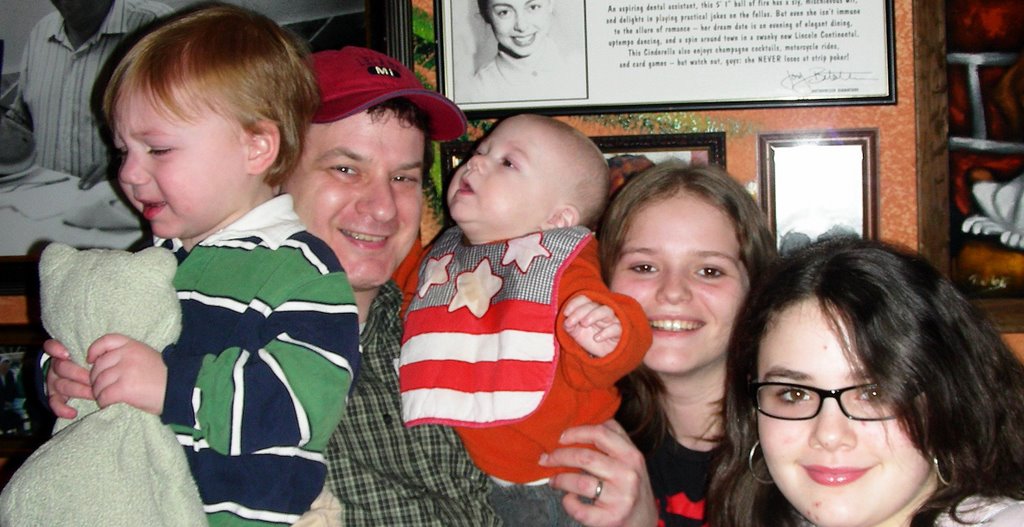 Not quite ready for full blogging. Meanwhile, as "hold" music, enjoy the many moods of the Lovy brood -- the result of out-of-control self-replication. I call it "gray goo-goo."
Backgrounder
Why the Nano Generation doesn't need us
Maxwell Lovy's NanoDance
I've got more male!
Human Nanofactory in Four Dimensions


I'm taking care of the children (Max and Sam) today, so there is little opportunity for writing, but watch this space for commentary on this Salon article, along with a slow return of this blog as nanotech's salon des refuses.


